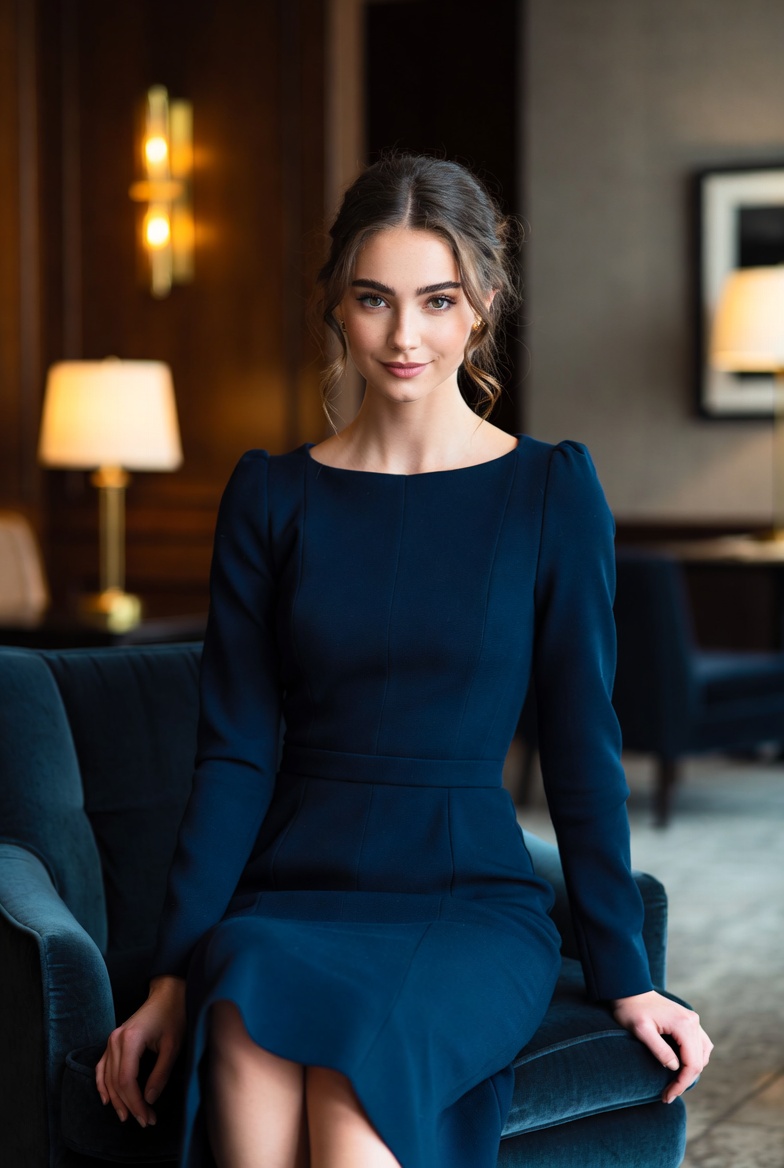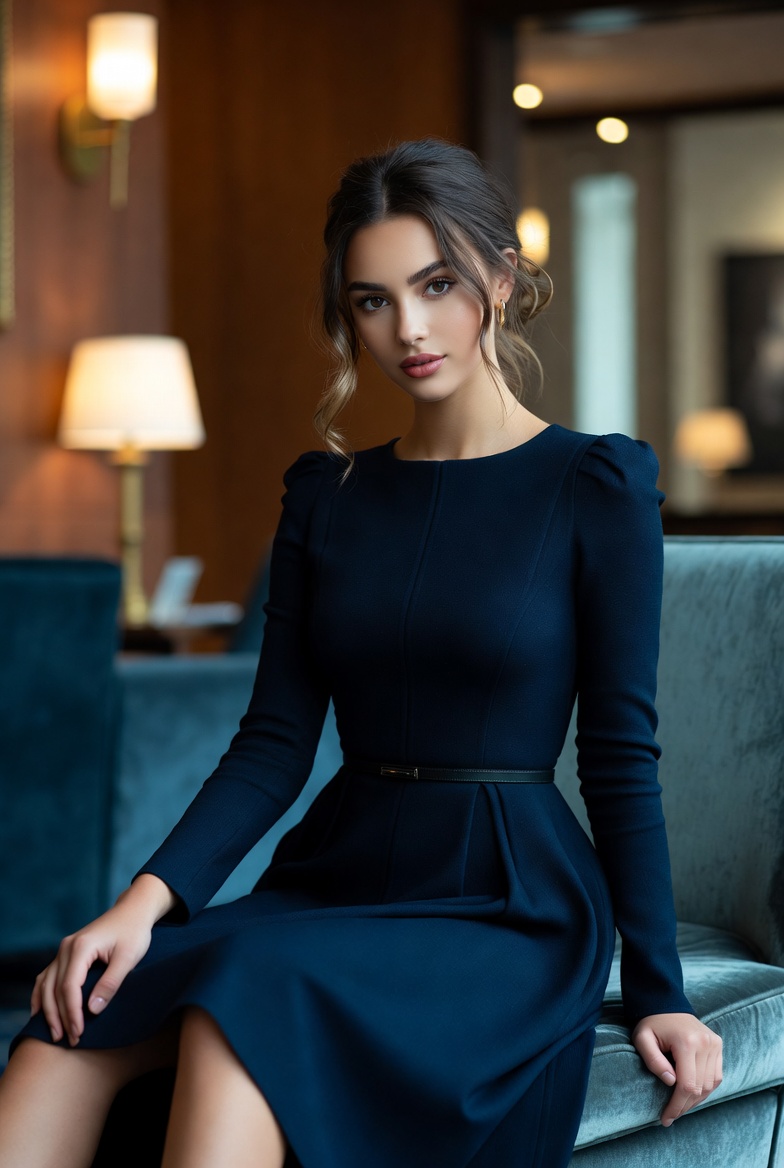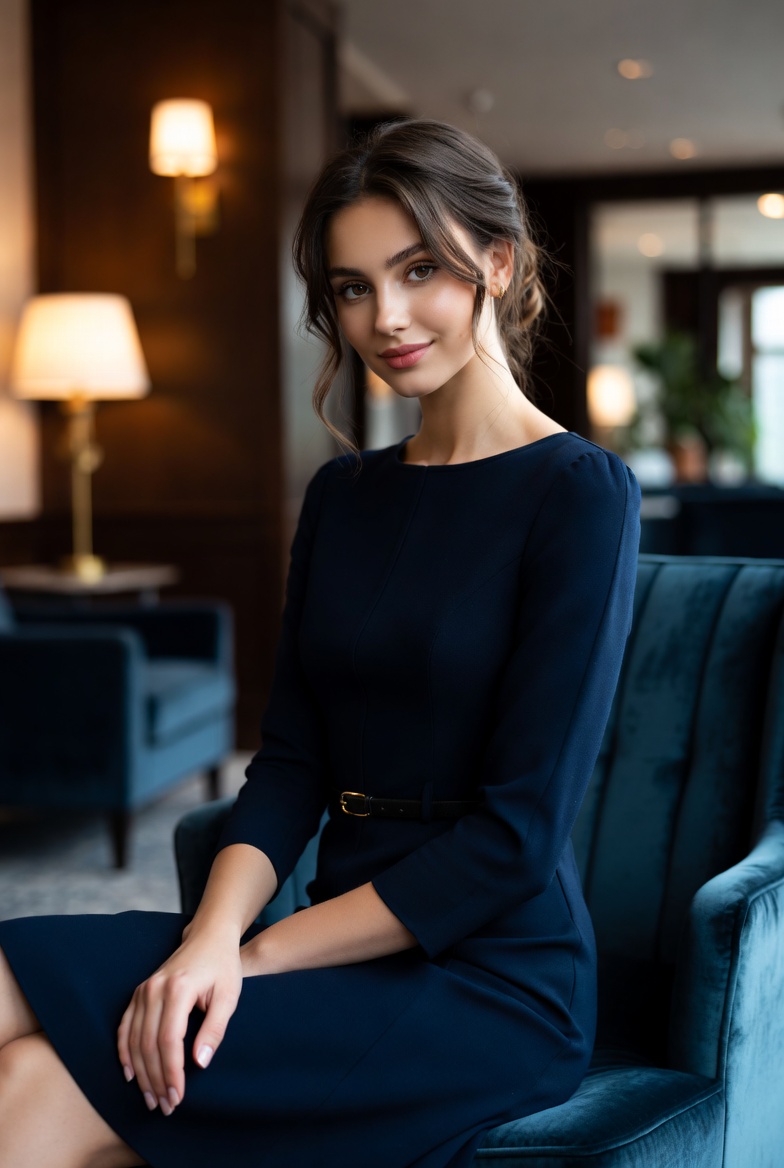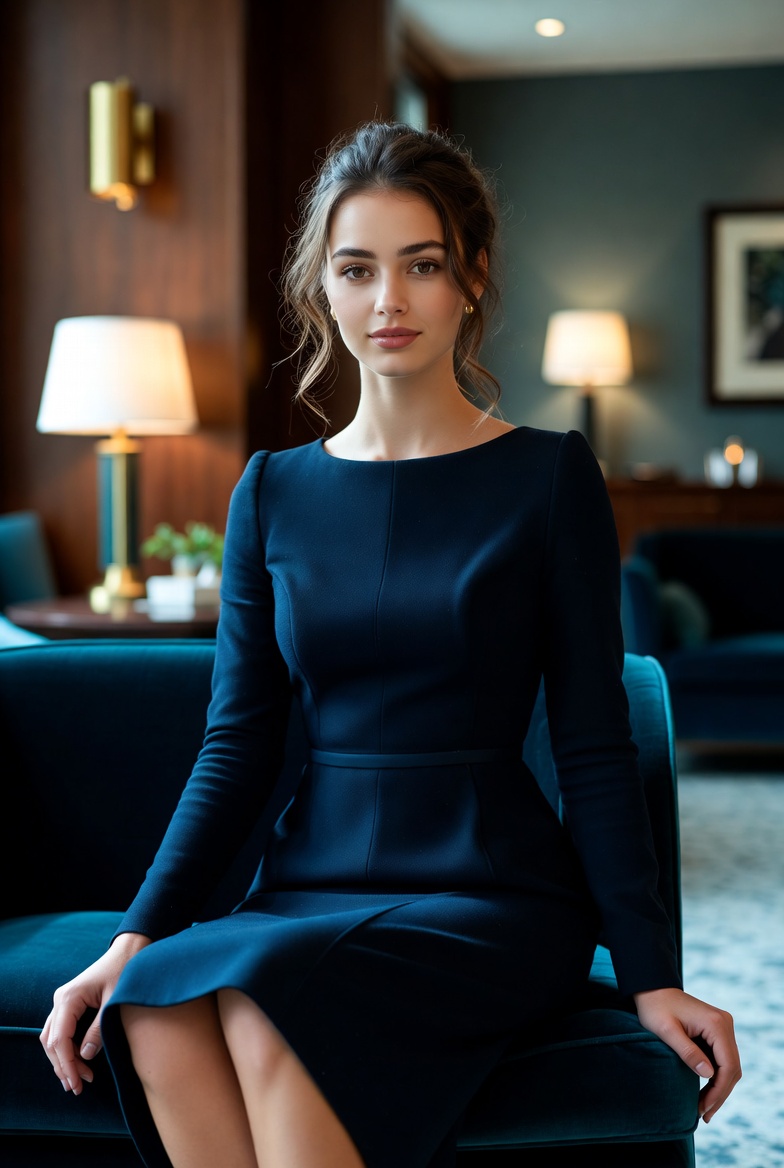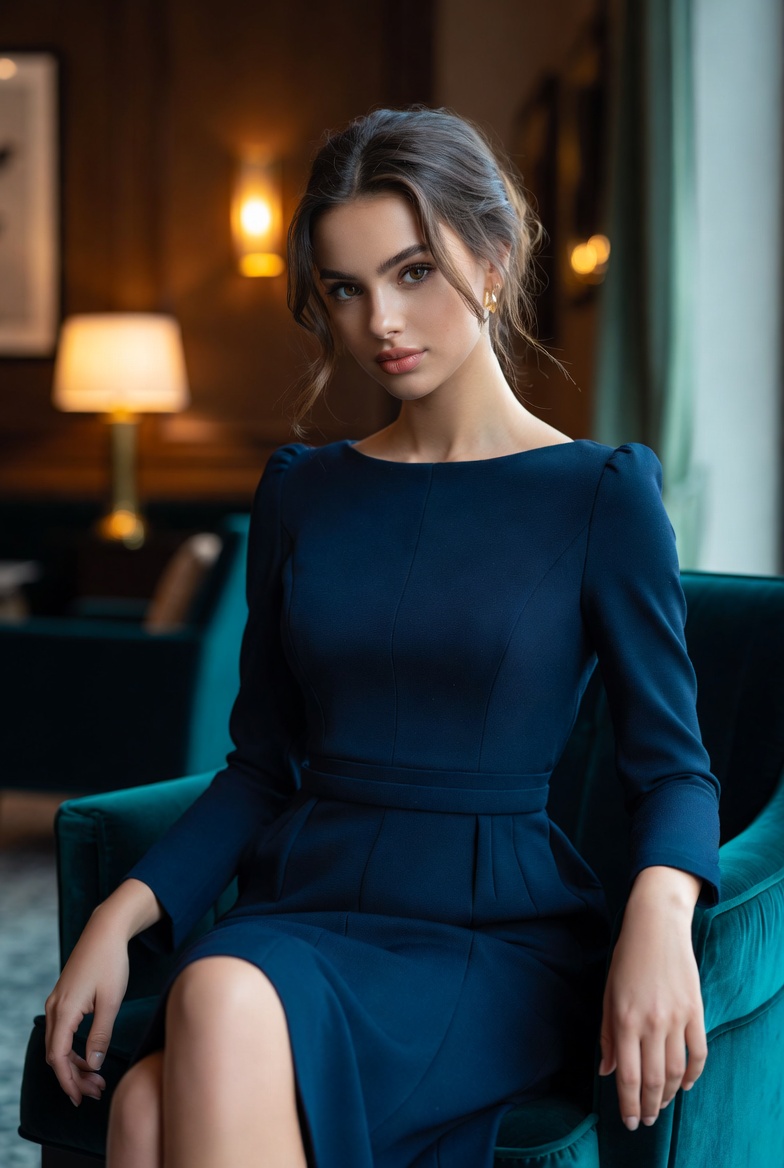
Cinematic Boutique Hotel Lobby Scene With Warm Practical Lights
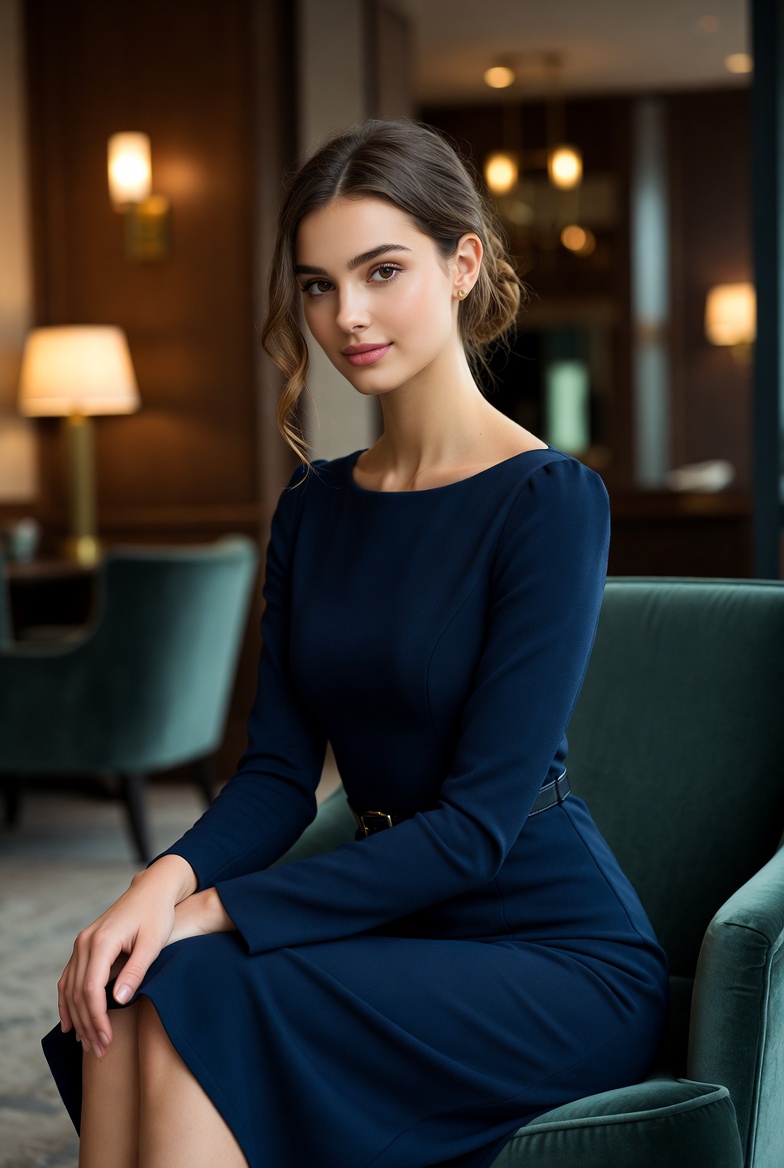
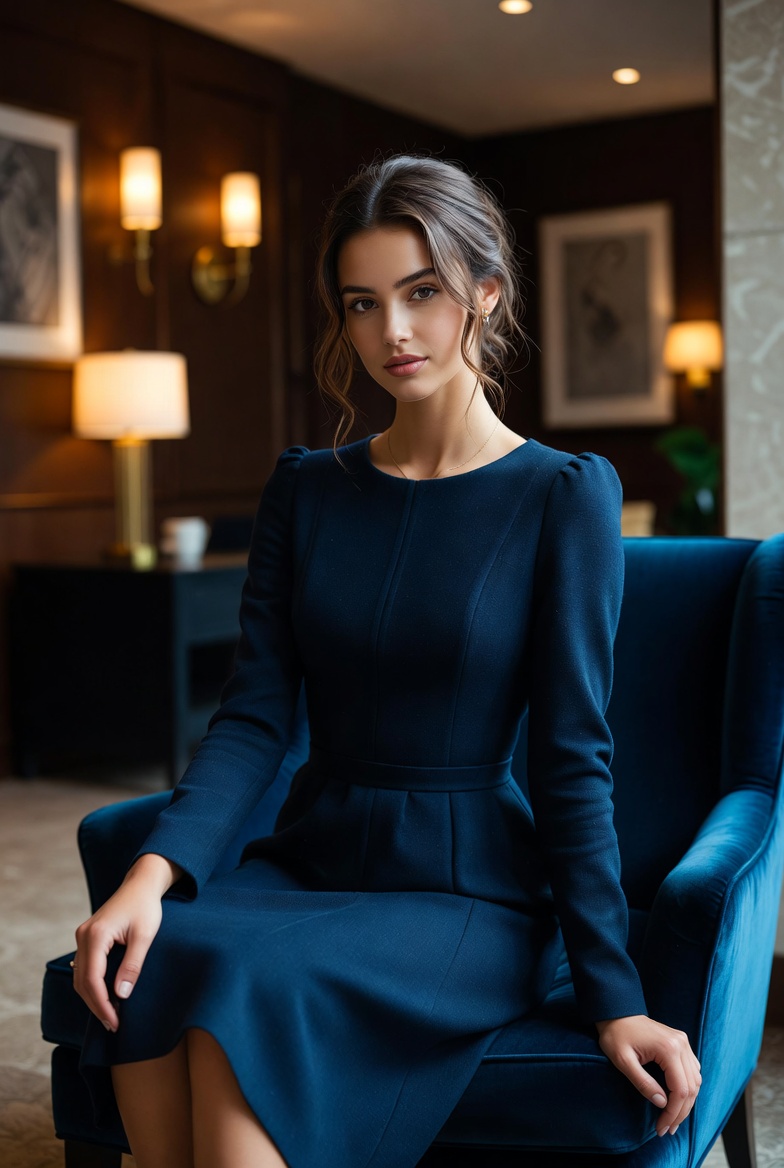
Some of the most “expensive-looking” AI images come from environments that already feel designed: boutique hotel lobbies, modern lounges, and carefully curated interiors where every surface has a purpose. In this concept, the scene centers on a stylish young woman in her early twenties (21+), poised and composed, seated in a refined lobby space that blends warm practical lighting with gentle natural fill from tall windows. Her presence is confident and modern relaxed shoulders, a calm gaze, and an editorial stillness that reads like a frame pulled from a prestige drama. Nothing about the mood is suggestive; it’s professional, fashion-forward, and cinematic in the cleanest sense: intentional light, controlled color, and tactile realism.
This visual style works exceptionally well for Midjourney v6, SDXL, and Flux because interiors offer “anchoring details” that AI models love: textured upholstery, wood grain, brushed metal fixtures, stone flooring, and layered light sources. Warm lamps and sconces introduce believable highlight roll-off on hair and skin, while a soft window fill prevents shadows from becoming muddy. The result is a face and wardrobe that feel dimensional, not pasted on. When you add a filmic grade gentle contrast, slightly lifted blacks, and warm highlights the image gains that cinematic polish that makes viewers assume it was shot with a real camera crew and a stylist on set.
A boutique lobby also solves a common prompt problem: background chaos. Instead of random clutter, you get deliberate geometry arched doorways, minimalist art, symmetrical seating, and negative space. Those clean shapes help the model maintain perspective and keep the subject as the focal point. The woman’s styling should match the setting: modest, tailored, and contemporary. Think a structured midi dress, tasteful accessories, and refined materials that show micro-texture under the lights. When the subject looks like she belongs in the environment, realism rises sharply.
Below is one universal master prompt designed to reliably produce this cinematic interior aesthetic photoreal skin texture, believable mixed lighting, and editorial-grade composition without needing platform-specific versions.
The AI Prompt
Why This Prompt Works
The core strength here is mixed lighting done on purpose. “Warm practical lighting” tells the model to prioritize lamp-driven illumination, which naturally creates a cozy, cinematic mood and believable specular highlights on hair and jewelry. Adding “soft window daylight fill” prevents the scene from becoming too orange or underexposed, which is a common failure mode when prompts rely only on tungsten ambience. The 50mm prime lens is a sweet spot for cinematic realism: it feels natural, avoids extreme facial compression, and preserves environment context so the lobby reads as a character in the frame.
Composition choices also matter. A seated subject reduces awkward full-body proportions and makes fashion styling look grounded. “Chest-level camera angle” keeps perspective flattering and documentary-like, reinforcing the “captured moment” feeling. The prompt includes material cues velvet, wood paneling, stone floor because texture is where photorealism is won or lost. Finally, “crisp focus on the eyes” and camera settings signal photographic intent, which helps steer outputs away from painterly softness or overly sharpened, synthetic edges.
Tips for Customization
To create a full cinematic set, keep the lobby and lighting constant and vary one element per generation. Swap the dress color (emerald, burgundy, charcoal) while maintaining the same structured silhouette to preserve the editorial vibe. For a slightly more dramatic mood, change the time of day to “evening” and add “light rain visible through distant windows” (still subtle, still professional), which introduces atmospheric context without clutter. If you want a more fashion-campaign feel, replace the chair with “a modern leather sofa” and add “a designer tote placed neatly beside her,” emphasizing lifestyle luxury.
You can also tune the camera language. For more intimacy, switch “medium shot” to “tight portrait framing” while keeping 50mm, or move to “f/2.2” to retain a bit more background structure. For stronger separation, add “subtle rim light from a sconce behind her” so the hairline pops against darker wood paneling. The key is not to change everything at once cinematic consistency comes from locked lighting and a stable color palette.
Common Issues & Fixes
- Lighting looks flat or overly bright: Reinforce “warm practical lighting” and “soft window fill,” and add “gentle contrast, controlled highlights” to avoid blown lampshades and shiny skin.
- Face appears too airbrushed: Add “natural skin micro-texture, fine pores, subtle under-eye detail” and avoid overly glamorous descriptors that push the model toward plastic beauty.
- Background perspective feels warped: Emphasize “clean lines, symmetrical lobby design, minimalist decor,” and keep depth of field shallow so distant elements blur instead of deforming.
Frequently Asked Questions
- Can I change the seated pose to standing without losing the cinematic look?
Yes switch “seated comfortably” to “standing near a brass sconce” and keep the chest-level angle and mixed lighting cues so the scene remains grounded and filmic. - How do I make it feel more like a movie still?
Add “subtle film grain, realistic halation on highlights, gentle vignette” while keeping the same camera and lens references. These cues push the image toward a cinema-frame aesthetic. - What’s the best way to keep hands natural and not awkward?
Use simple, realistic hand actions like “hands resting on the armrest” or “one hand lightly holding a ceramic cup,” and keep the framing medium so hands aren’t the dominant detail.