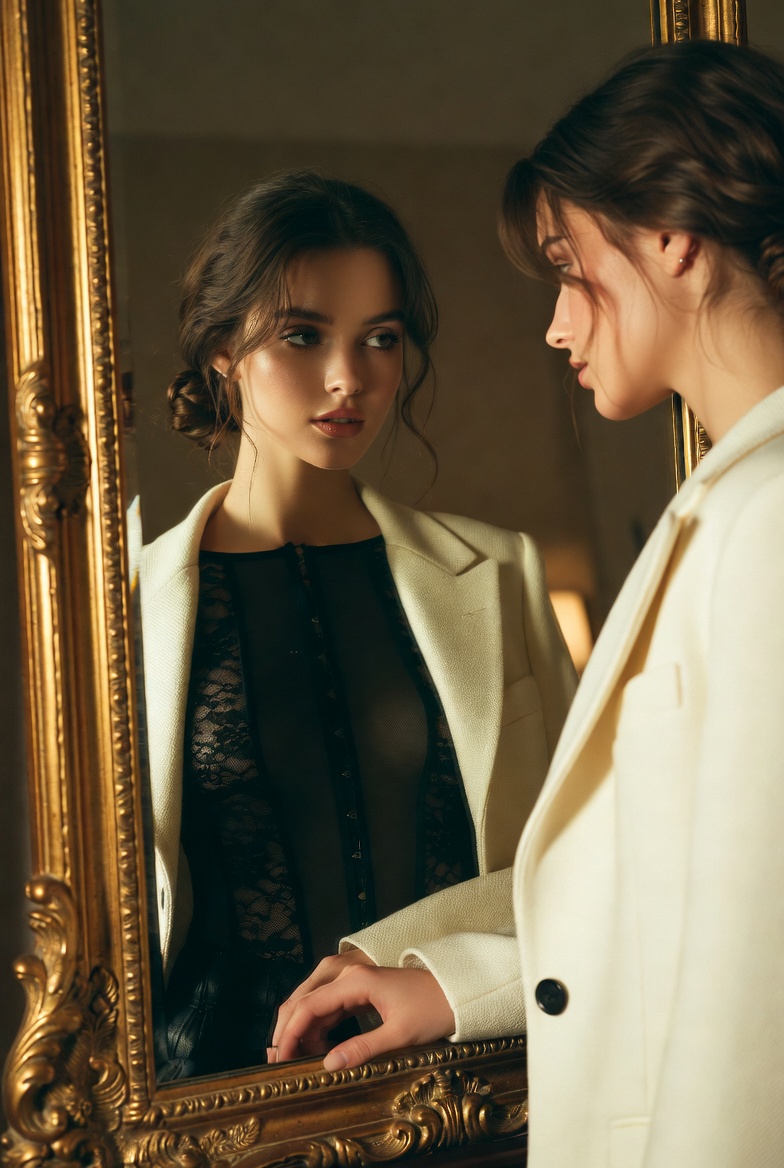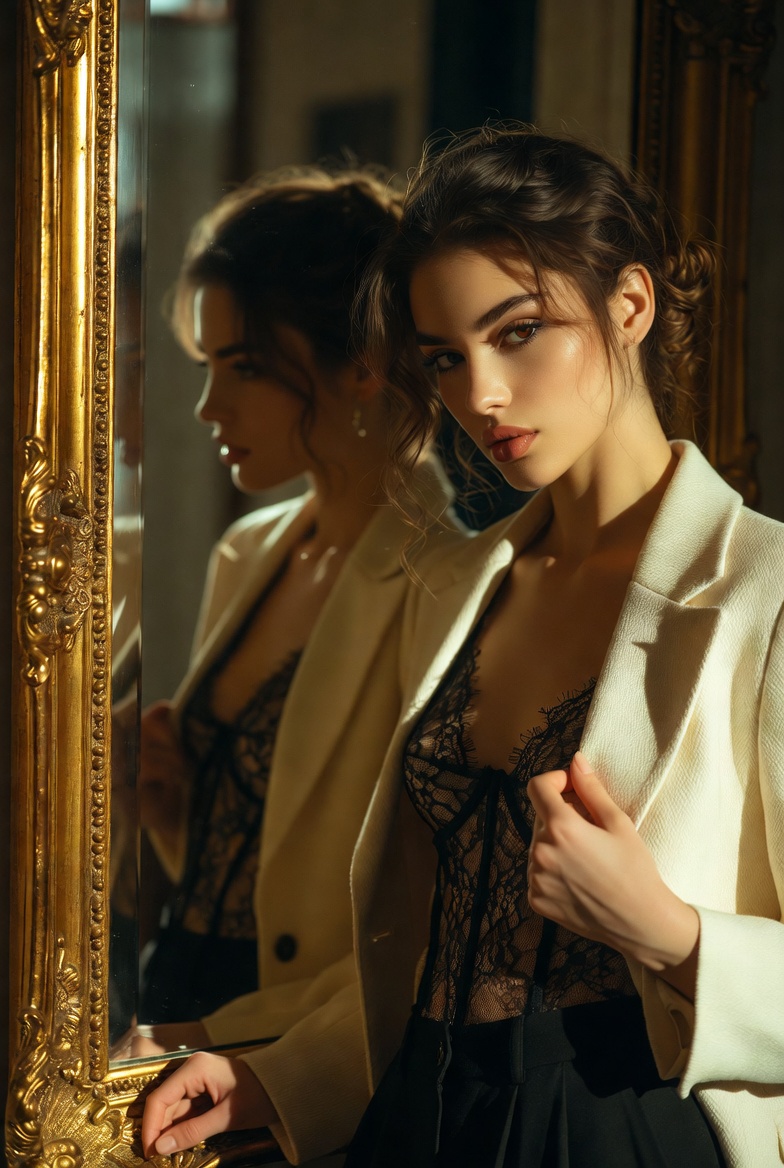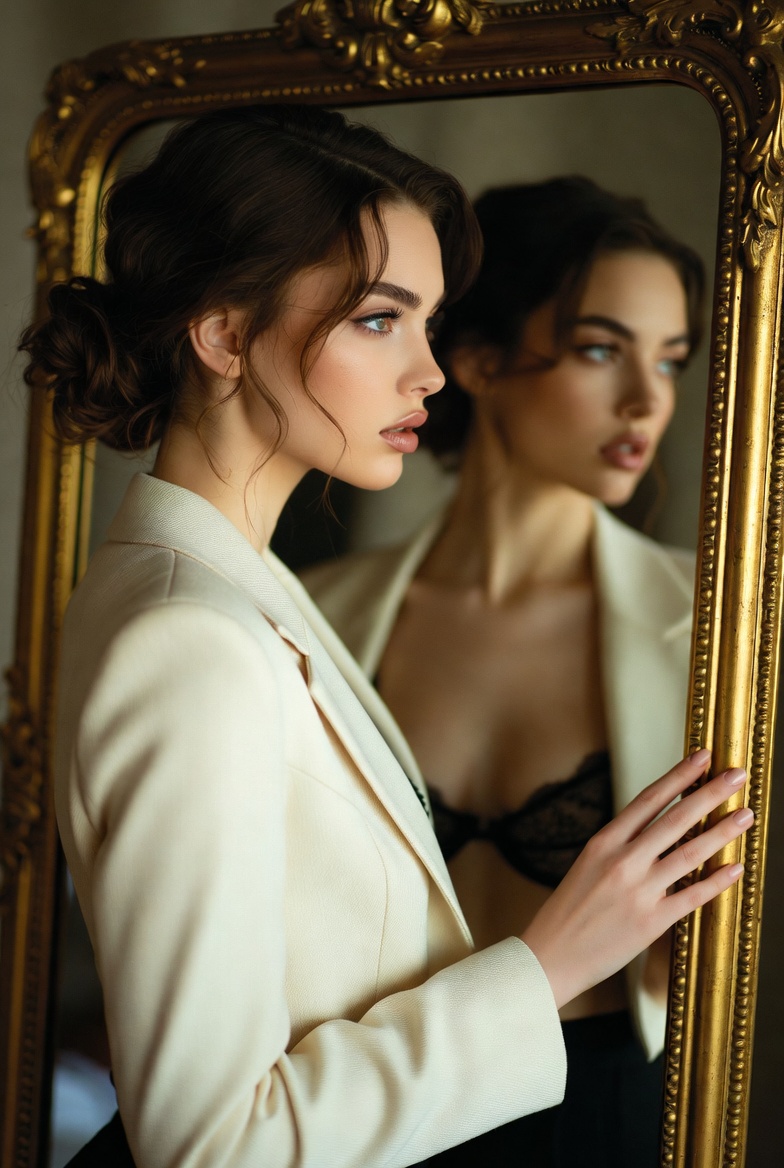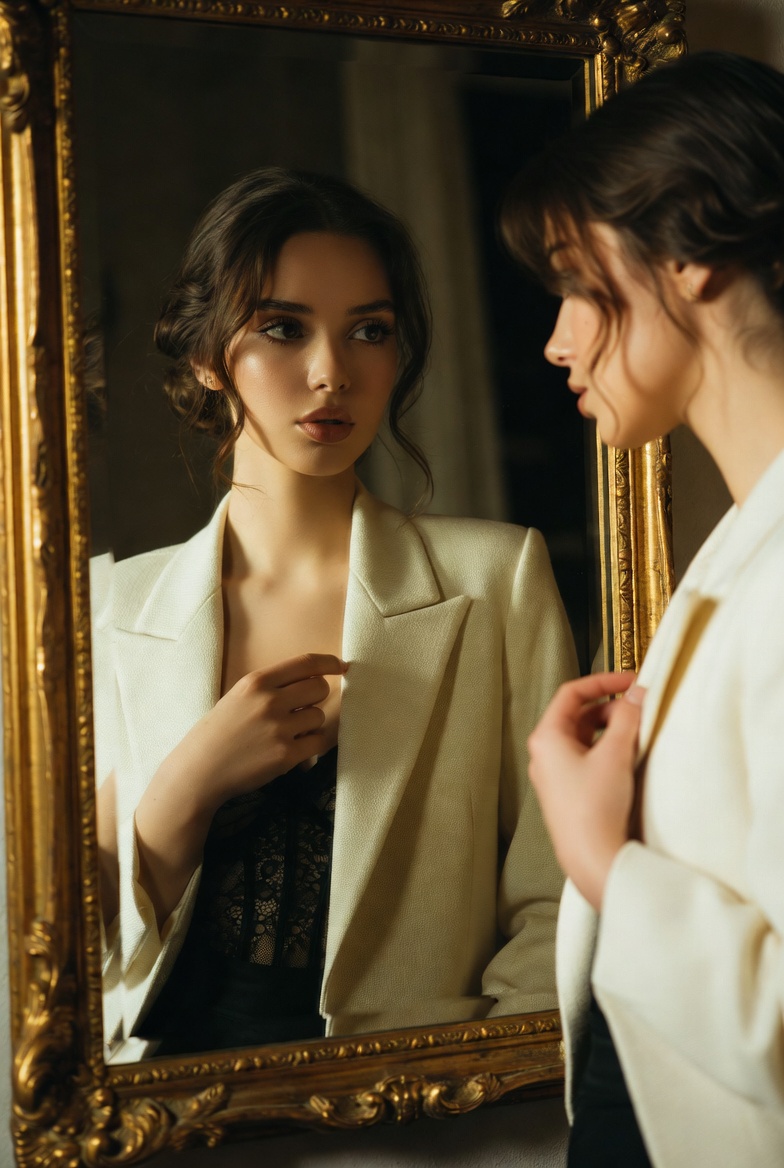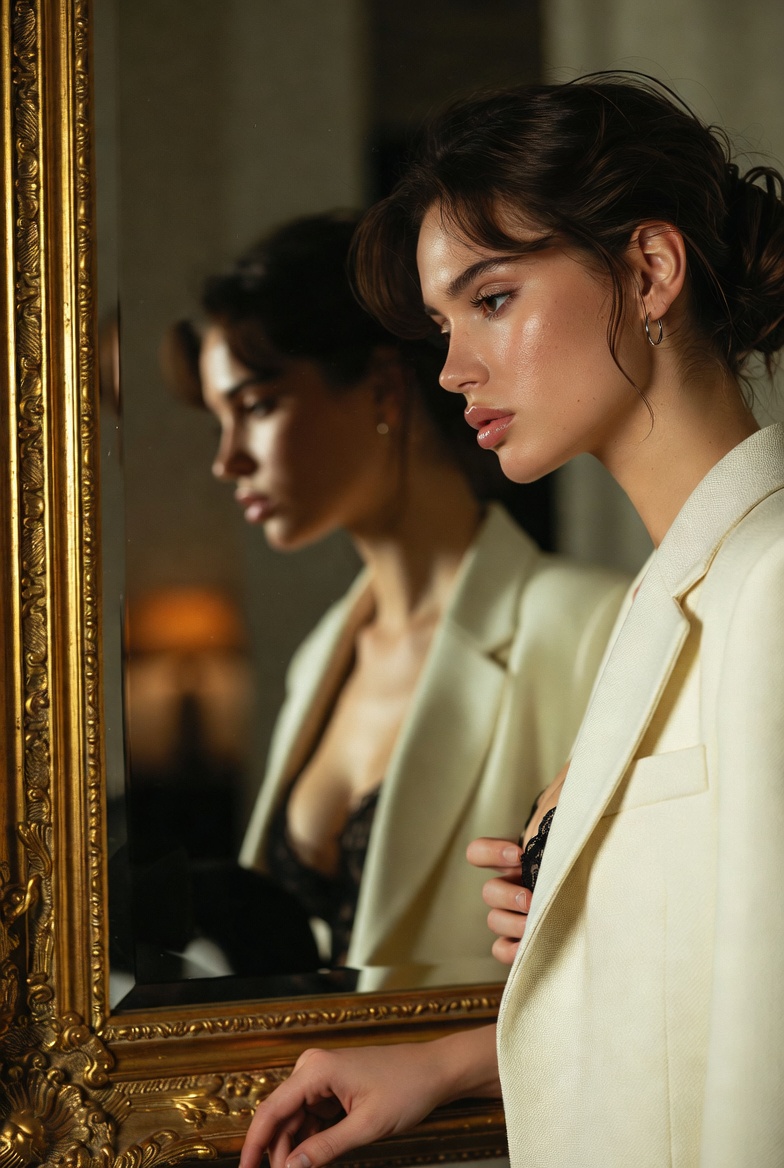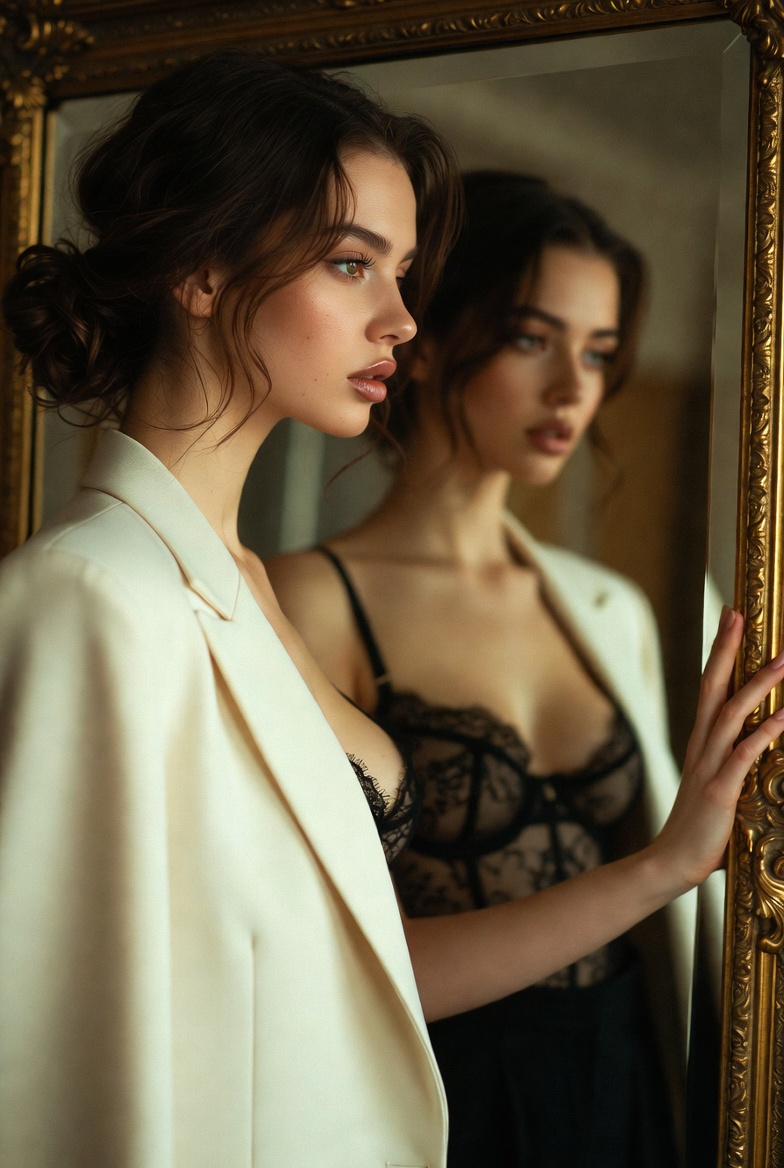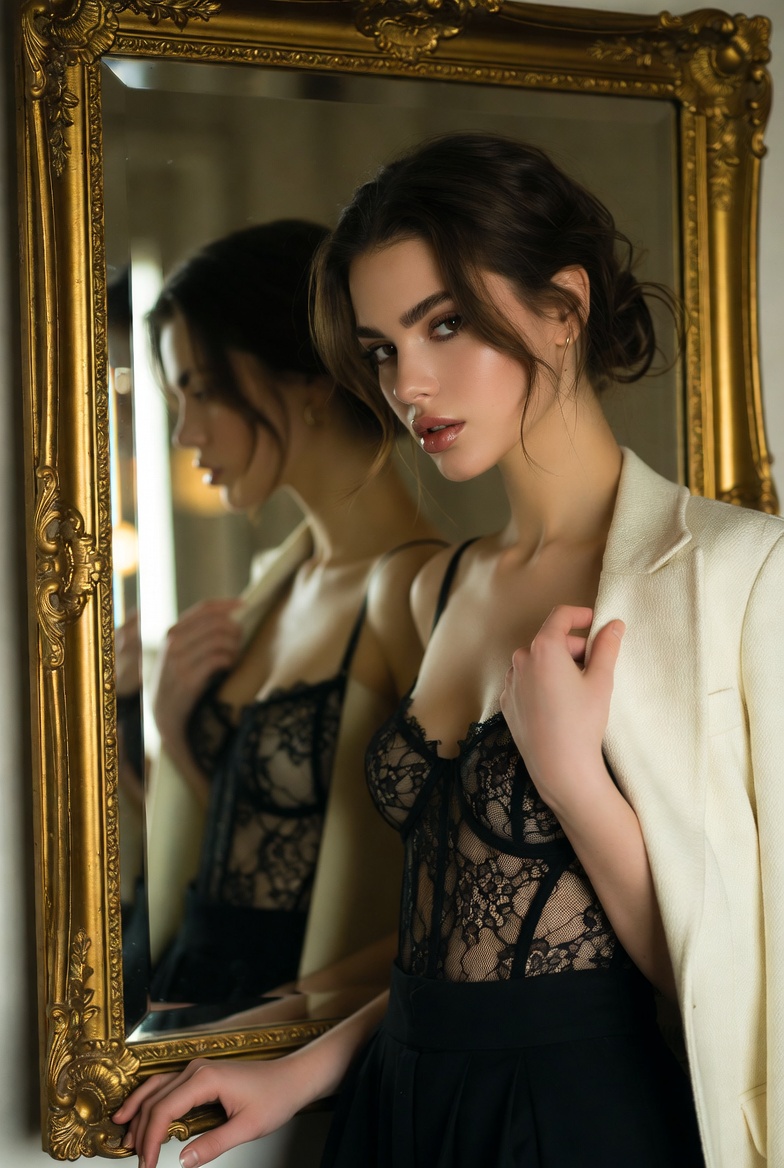
Mirror scenes go viral for one reason: they feel intimate without needing chaos. A single ornate frame can turn a simple room into a story especially when it’s antique gold, slightly weathered at the corners, catching warm highlights like jewelry. This prompt is built around that exact “quiet luxury” tension: vintage décor, cinematic light, and a modern fashion silhouette that reads confident rather than costume. It’s the kind of image that looks like a behind-the-scenes snapshot from a fashion editor’s private suite soft, real, and impossibly aesthetic.
The setting matters as much as the subject. Picture a vintage room with tall walls, a faded patterned rug, and a narrow side table holding a small lamp that pools warm light onto old wood. Daylight leaks in from a sheer-curtained window, creating gentle contrast: cool softness from outside, warm glow from inside. In that mix, the mirror becomes a second camera. You don’t just see her you see her twice: the direct figure and the reflection, layered with subtle glass refraction that makes everything feel more photoreal.
Her styling keeps the “lace as outerwear” idea fashion-forward and fully covered. Instead of anything revealing, she wears a black lace bodysuit with a structured, lined front panel and clean seams think couture lingerie-inspired fashion rather than underwear. Over it, a tailored blazer (cream or espresso) sharpens the silhouette and adds realism: it’s exactly what someone would throw on for an elevated, editorial look. She pairs it with high-waisted satin trousers that catch lamp light in smooth highlights, plus pointed-toe heels that elongate the line without stealing focus from the reflection. The textures are the hook: lace pattern detail, blazer weave, satin sheen, and the mirror’s gilded carving all captured crisply enough to feel tactile.
The pose is simple but cinematic. She stands slightly angled to the mirror, one hand resting on the carved frame, the other adjusting the blazer lapel calm, composed, and subtly flirty in a “fashion confidence” way. Her expression is relaxed, eyes focused on her own reflection as if she’s checking the final look before stepping out. This isn’t a nightclub scene; it’s a refined, moody interior portrait where styling and light do the talking.
The Master Prompt
Why This Prompt Works
A 50mm perspective is ideal for mirror work because it feels natural no distorted edges on the frame or warped facial proportions. At f/1.4, you get premium depth: her eyes and lace pattern stay razor sharp while the room melts into a soft, warm blur that still reads “vintage.” The color theory is restrained and elegant: gold frame + warm lamp light adds richness, while black lace and satin create clean contrast and a modern editorial anchor. Portra-style rendering keeps skin tones creamy and believable, even with mixed window daylight and tungsten lamp glow.
Style Variations
- Darker, moodier editorial: Swap the cream blazer for a black tailored blazer and add a single bold red lip for classic noir energy.
- Soft romantic vintage: Change the blazer to a dusty-rose satin wrap jacket and use softer window light, reducing lamp warmth for an airy feel.
- High-fashion power look: Keep the lace bodysuit but replace trousers with a structured leather pencil skirt and add sleek gloves for sharper drama.
Common Issues & Fixes
- Mirror reflection looks “wrong” or misaligned: Add “accurate reflection perspective, realistic refraction, consistent eye-line in mirror” to stabilize geometry.
- Lace turns into mushy texture: Specify “crisp lace pattern, visible weave, clean edges, no melting artifacts” and keep focus on the bodysuit plane.
- Gold frame becomes overly shiny: Add “controlled highlight roll-off, realistic patina, subtle wear on gilding” so it reads antique, not plastic.
FAQ
Q1: How do I make it feel more like a candid fashion moment?
Add “slight imperfection in blazer drape, natural breath, micro-smile,” and keep the hand on the frame relaxed, not posed.
Q2: Can I emphasize the room more without losing the subject?
Yes switch to a 35mm look and describe more décor (rug, chair, lamp), but keep her centered in the mirror so the reflection remains the anchor.
Q3: What detail sells photorealism the most in mirror shots?
Micro-texture: lace weave, blazer stitching, tiny smudges on mirror glass, and controlled, realistic reflections.