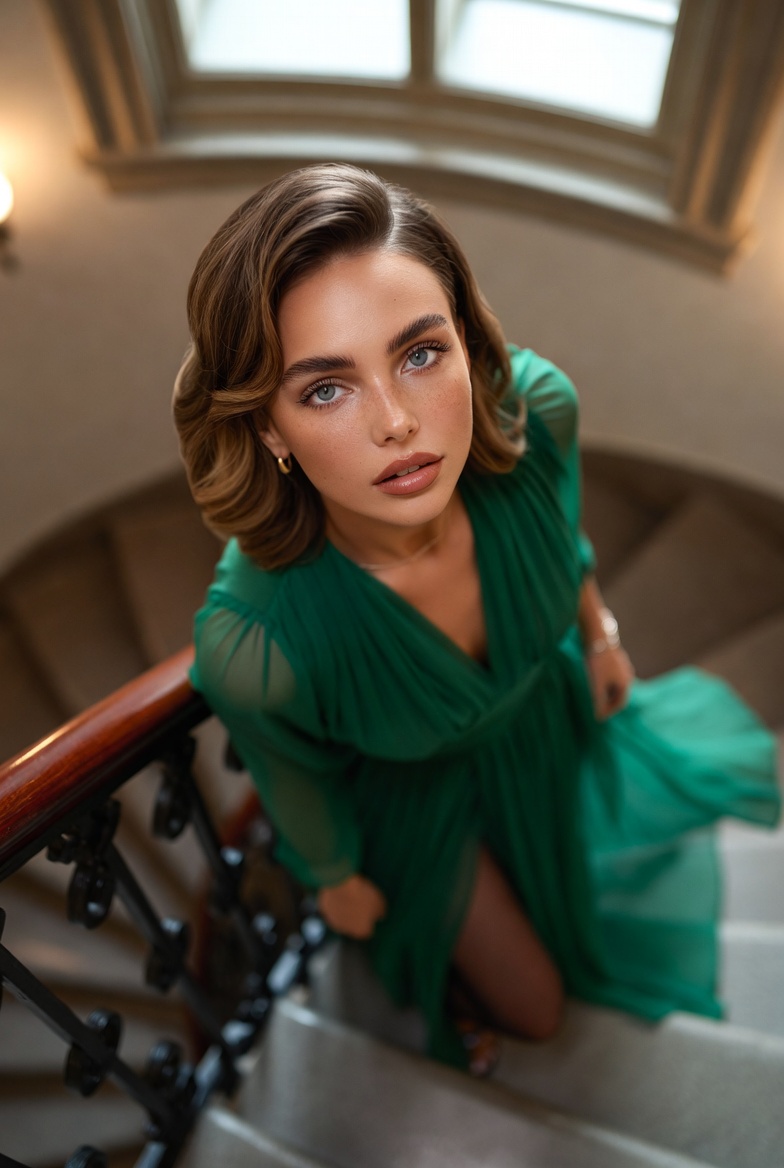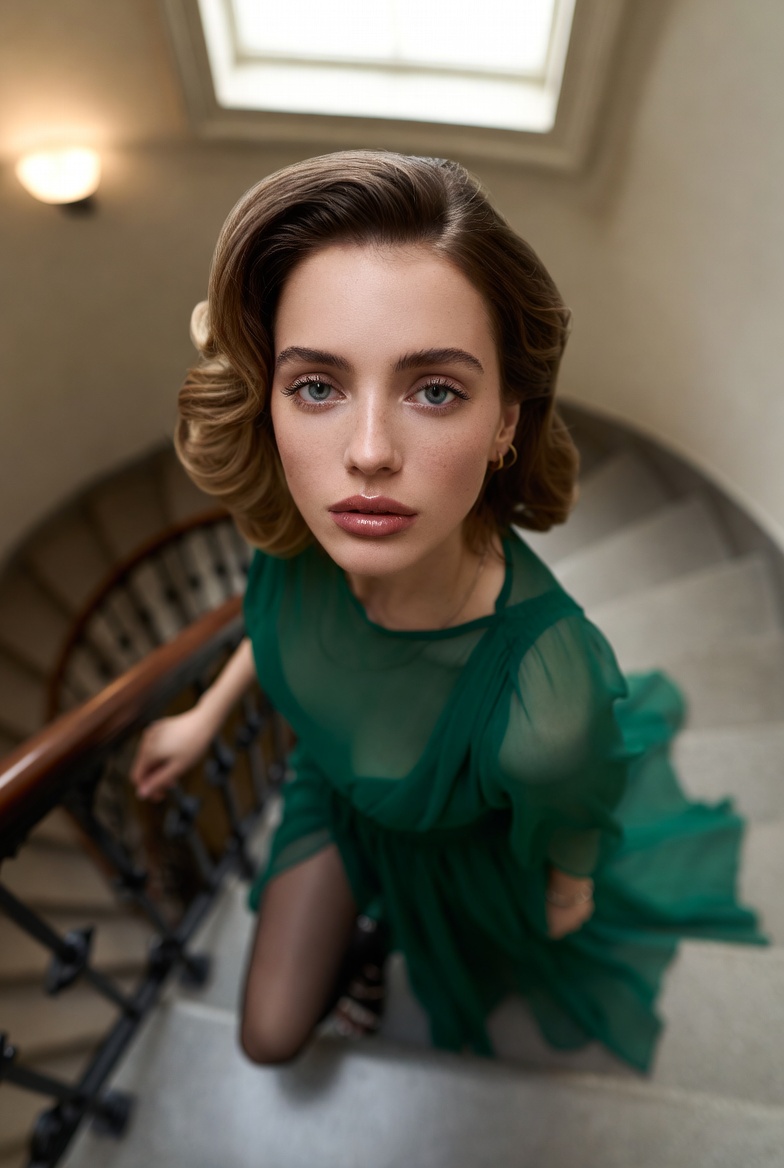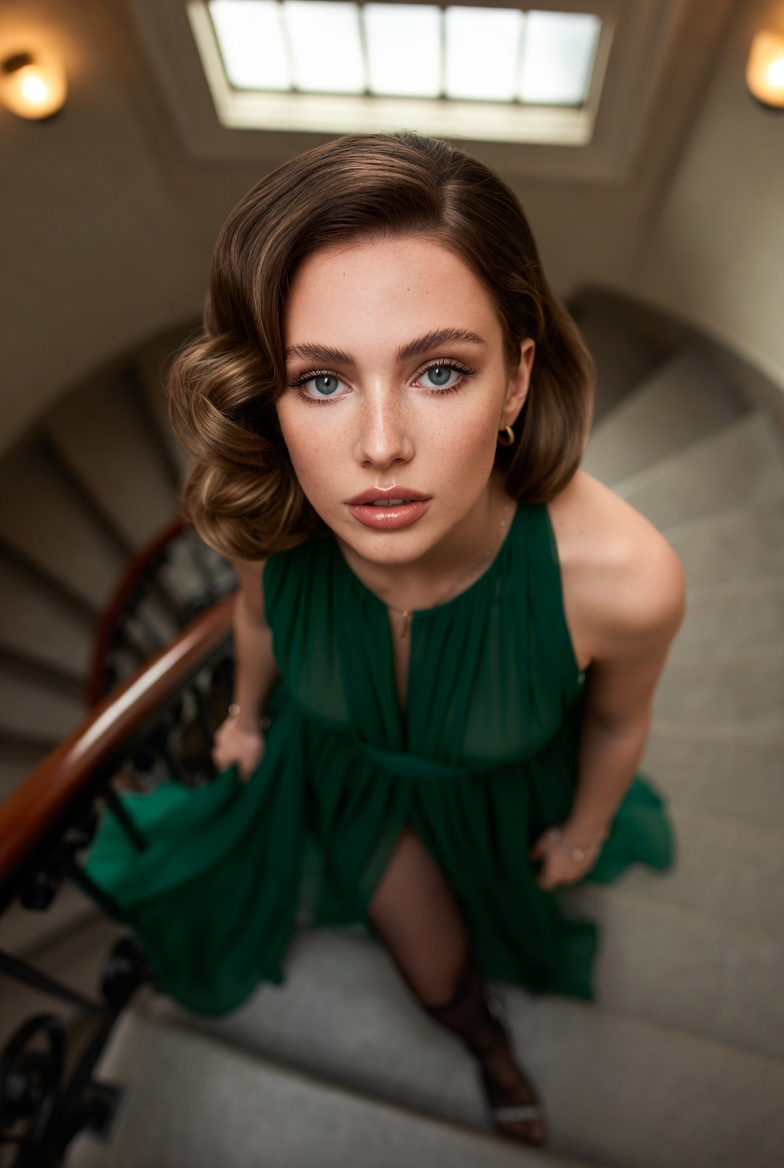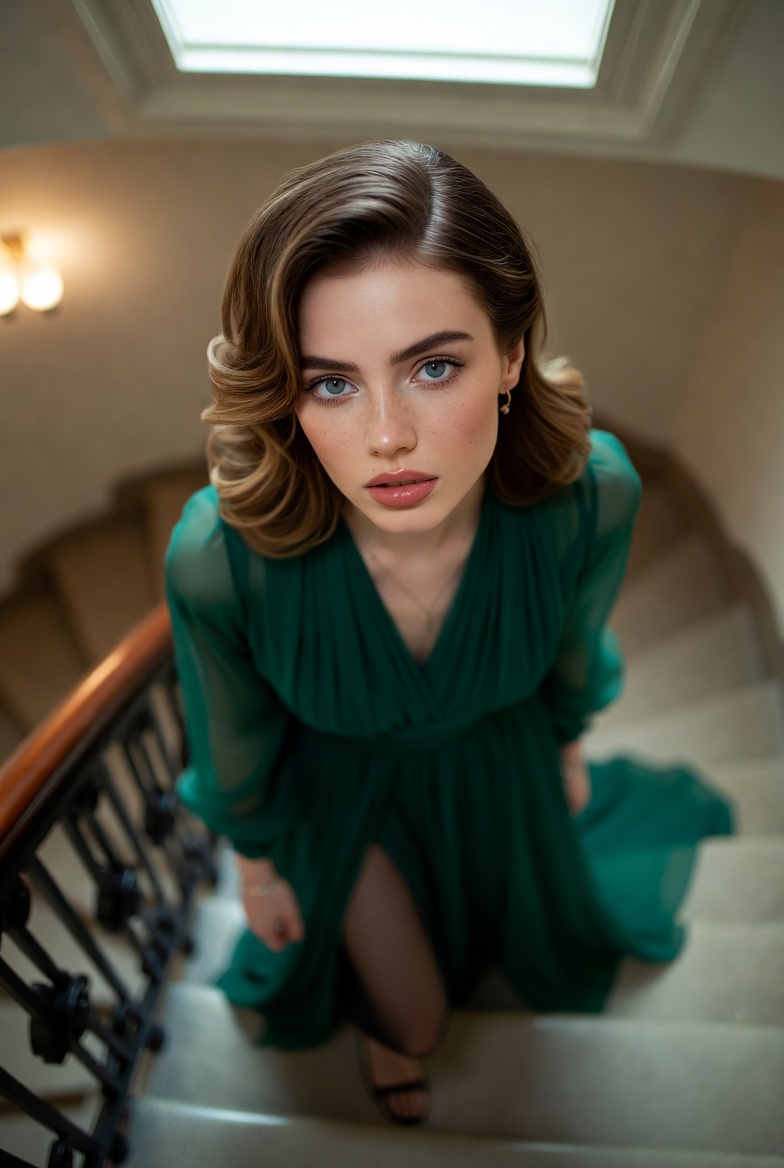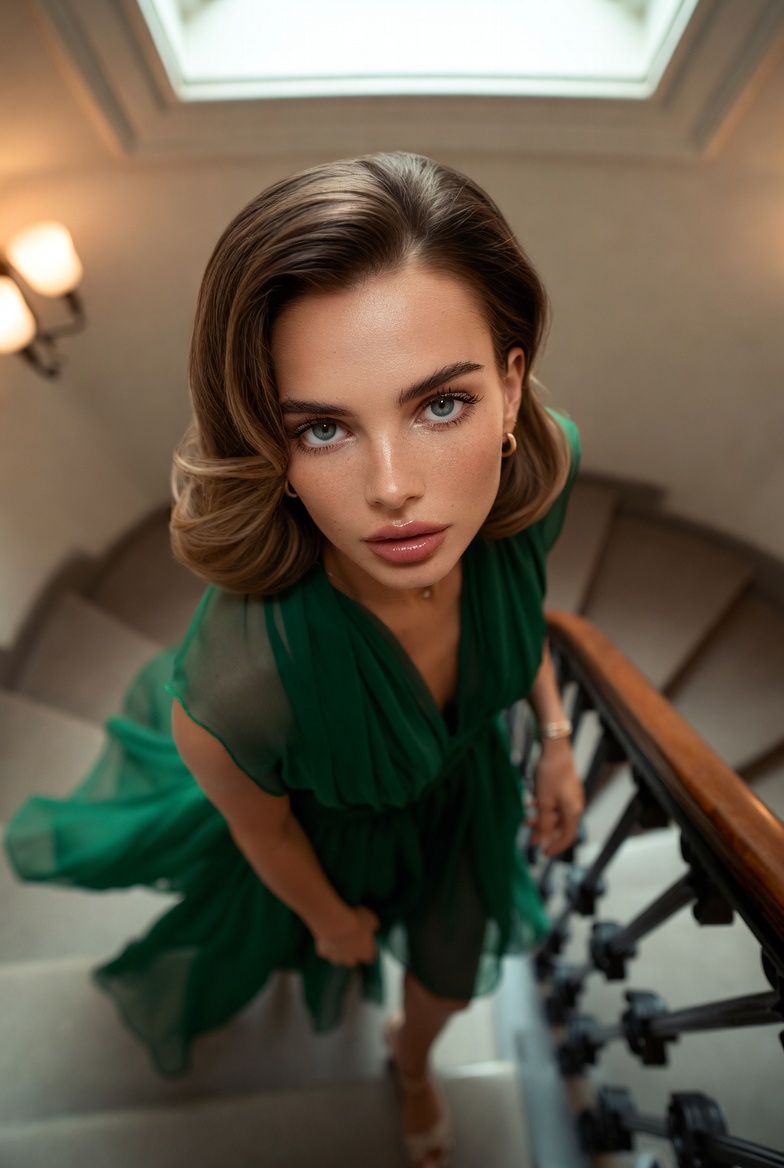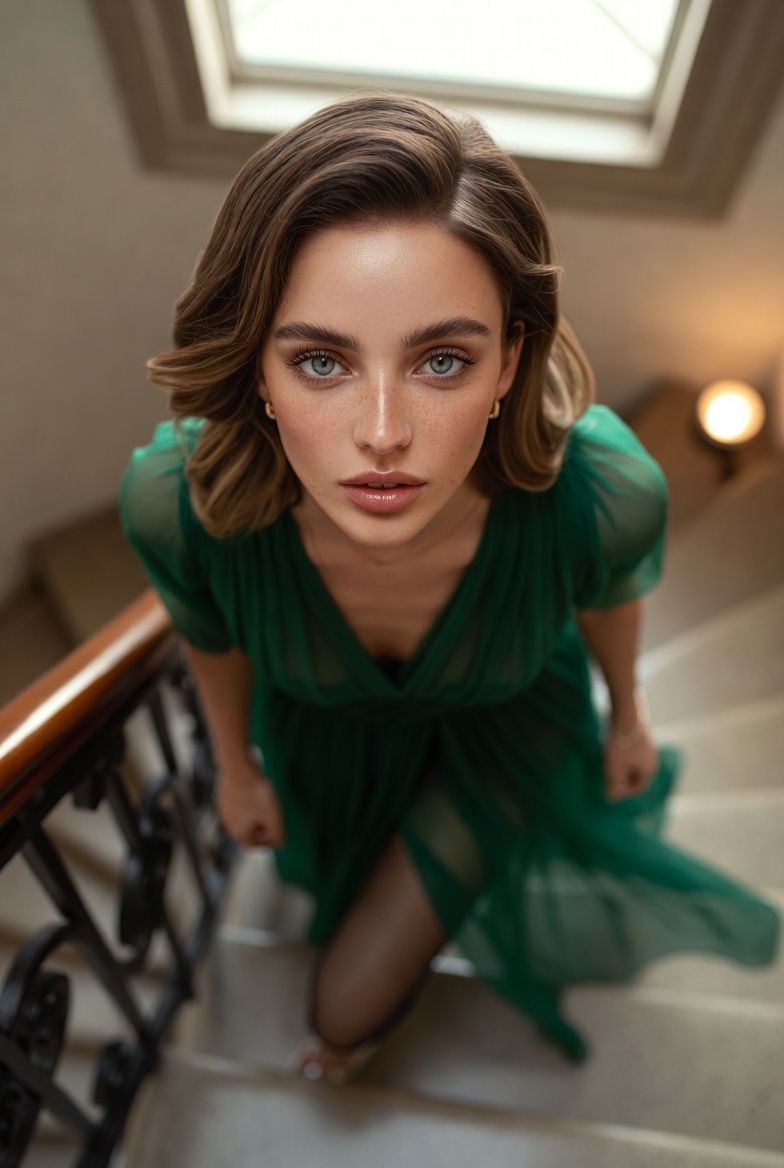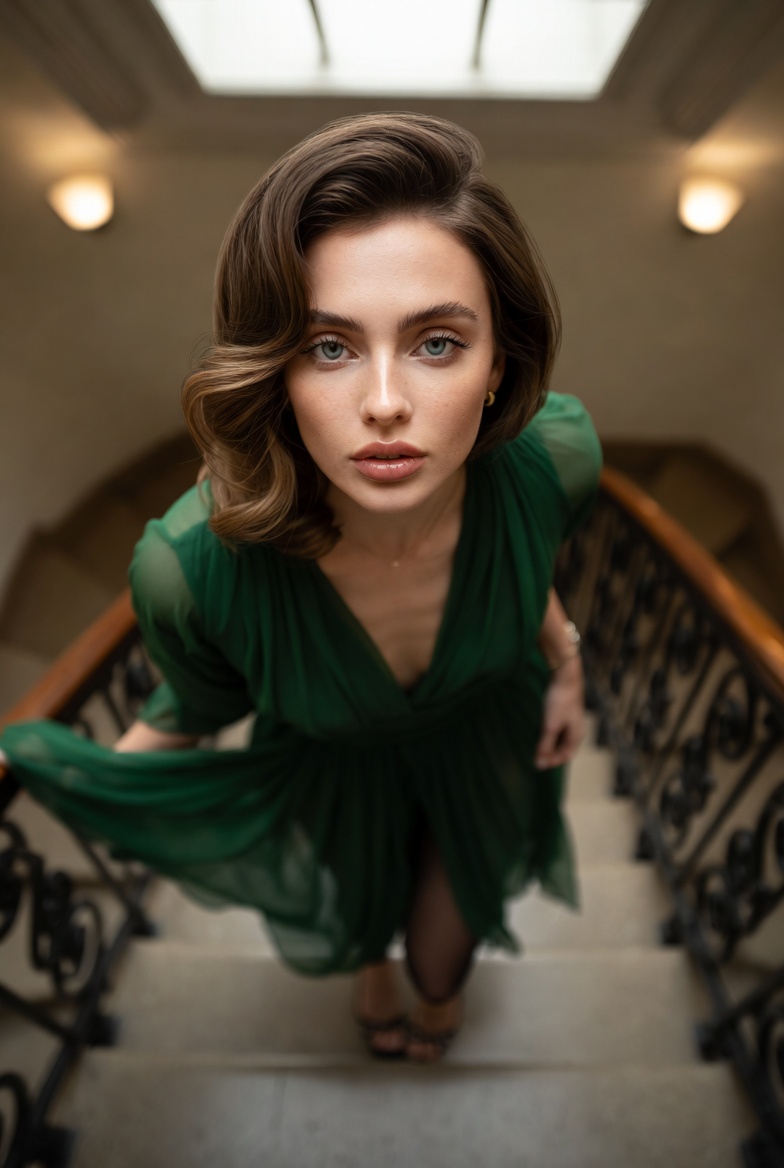
A spiral staircase is one of those rare locations where composition is basically pre-designed. Every step is a leading line, every railing curve is a guide, and the entire scene feels like motion even when the subject is standing still. That’s why this setup looks so “viral” on Instagram: it turns a single portrait into a graphic pattern. You’re not just photographing a person; you’re photographing geometry, rhythm, and the illusion of a perfect swirl. The staircase becomes a frame within a frame, and the subject becomes the calm center of a cinematic spiral.
The mood here is confident, elegant, and slightly mysterious like a fashion editorial caught mid-transition. The key is the high-angle top-down perspective: the camera looks straight down from the upper landing, and the subject looks up into the lens. That eye contact flips the power dynamic in a fun way. Even though the camera is above, her gaze pulls you in, creating instant connection. The expression should feel composed and self-possessed soft lips, relaxed brow, bright eyes more “quiet authority” than exaggerated drama. A small detail like her fingertips grazing the railing makes the moment feel real, like she’s paused for one breath before continuing down the stairs.
Wardrobe is where the spiral theme becomes unforgettable. A flowing midi dress with a wide skirt (think soft chiffon or satin-silk blend) naturally echoes the staircase curve when it fans around her legs. Choose a color that complements the architecture: deep emerald for warm stone stairs, champagne for dark metal railings, or midnight blue for modern concrete. The dress should be fully covered and elegant defined waist, tasteful neckline, and fabric that shows real drape and stitching. Add sheer tights if you want extra texture and realism under interior light, plus sleek ankle-strap heels or refined ankle boots that match the setting. Keep accessories minimal: small hoops, a thin necklace, maybe a delicate bracelet that catches a pinpoint highlight when she looks up.
Lighting should feel architectural and believable: a skylight above, a soft window spill, or warm sconces along the stairwell. The goal is depth subtle shadows between steps, gentle highlight roll-off on fabric folds, and enough contrast to show the railing’s curve without making the scene harsh. With the right lens and depth of field, the staircase becomes a dreamy tunnel behind her, while her eyes, dress weave, and the nearest step edges stay crisp. The result is clean, photoreal, and editorial: one human moment inside a perfect geometric swirl.
The Master Prompt
Why This Prompt Works
A 35mm lens is ideal for showing the staircase geometry without extreme distortion, and f/2.0 provides separation while keeping enough architectural detail to sell the spiral. The high-angle viewpoint turns the location into a graphic design element, while her upward gaze creates emotional focus. Color theory is simple and strong: emerald against neutral stone/iron feels premium and editorial, and Portra-style rendering helps skin stay warm and lifelike even in mixed interior light, while preserving highlight detail on chiffon folds and metal railing reflections.
Style Variations
- Modern minimal: Switch the setting to a concrete spiral staircase and change the dress to matte black with sharper tailoring for a cleaner editorial vibe.
- Golden romance: Make the dress champagne satin and use warmer sconce light for a softer, luxury-hotel atmosphere.
- Bold color pop: Keep the spiral composition but use a scarlet dress and cooler ambient light for high-contrast fashion energy.
Common Issues & Fixes
- Stair geometry warps: Add “accurate perspective, consistent step spacing, smooth railing curve, no warped lines.”
- Dress swirl looks stiff: Include “natural fabric physics, soft drape, windless interior movement, realistic folds and hem weight.”
- Hands look unnatural on railing: Add “natural finger curvature, relaxed grip, correct hand scale, realistic wrist angle.”
FAQ
Q1: How do I make the spiral effect stronger?
Place her slightly off-center on the curve and emphasize “skirt fanning along the step arc,” with clearer step edges near the foreground.
Q2: What if the high-angle shot makes the face too shadowed?
Add “subtle overhead skylight fill on face” and “preserved shadow detail” so eyes stay bright without flattening the stair texture.
Q3: What’s the best detail to push photorealism here?
Fabric + architecture textures: crisp chiffon weave, seam stitching, stone step grain, and believable metal railing highlights with smooth roll-off.